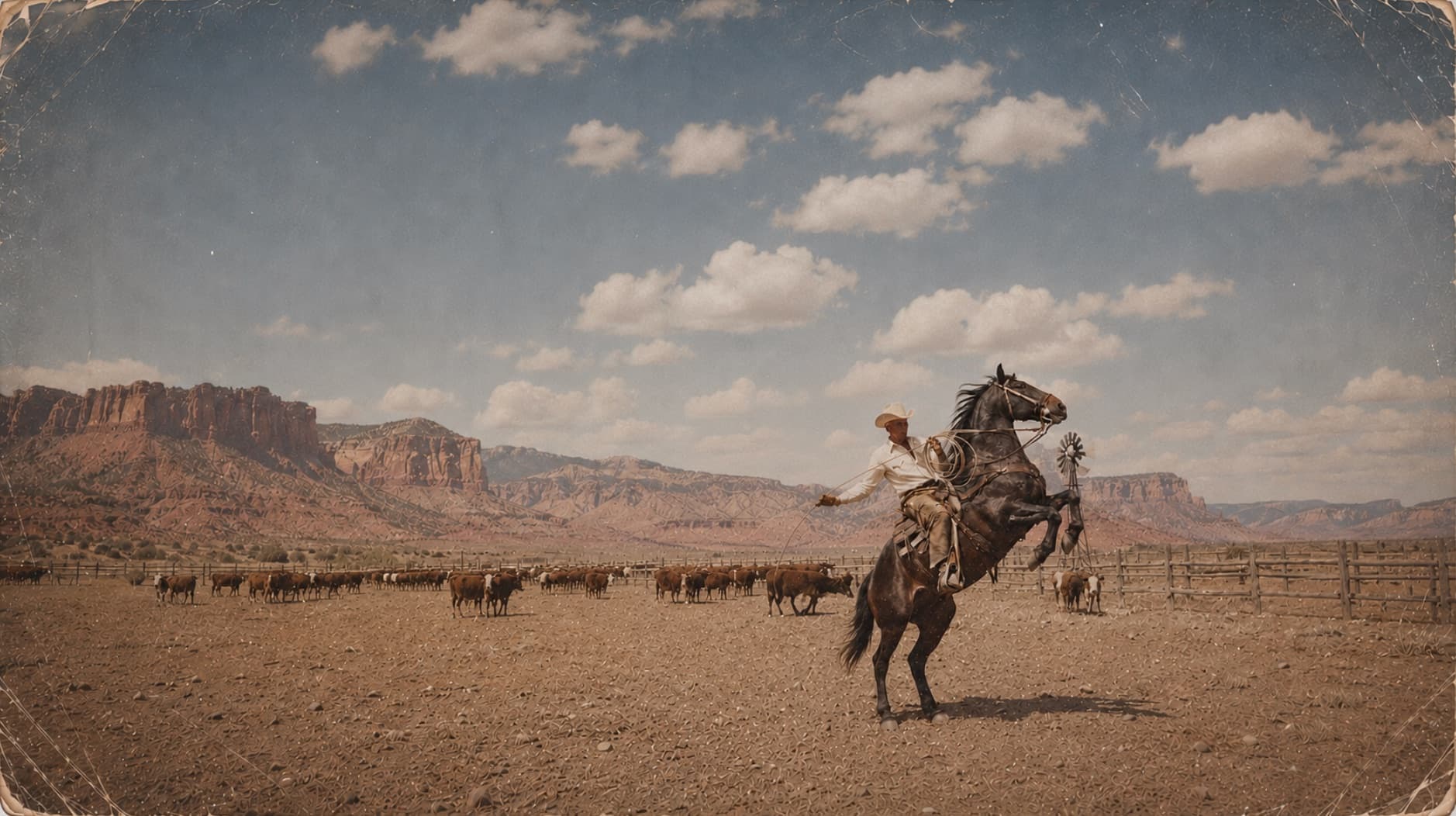
THE WILD WILD WEST
NOT YOUR GURU
Spirituality, Healers, Appropriation, Reciprocity, Gurus, Power Dynamics and Ethical Facilitation (15 minute read)
My Position
If you have ever placed some part of your healing in the hands of another person or felt drawn toward a nontraditional path, this essay is for you.
This is really fucking important to me. I found my way to substantial healing through a nontraditional path. I also work professionally within a largely unregulated space. That makes ethics, transparency, informed consent, discernment, and accountability more than professional ideals. They are essential to participant safety, practitioner integrity, and my commitment to minimize harm.
We are living in a remarkable time. Extraordinary advances in science, medicine, spirituality, technology, and access to information have opened possibilities that once felt unimaginable. But access to powerful practices is expanding faster than the safeguards surrounding them.
More people can find these practices and more people can present themselves as qualified to lead others through them. The possibilities are meaningful. So are the risks.
I offer this perspective earnestly, to the curious seeker, the cautious skeptic, and the hopeful at heart. I believe every word of it. I stand behind every implied stance, every explicit warning, and every note of caution about the landscape we are collectively shaping and navigating.
I do not write from a position of perfection or moral authority. I write from lived experience and from a deep sense of responsibility. My perspective has been forged through many experiences as a participant, a practitioner, and a witness. It has been shaped by my own healing, my mistakes and failings, what they have taught me, and the many forms of harm I have witnessed within these spaces.
I do not imagine myself exempt. Across my years as a practitioner, I have undoubtedly caused harm. Certainly never intentionally but intent does not erase impact. Anyone working closely with human vulnerability must be willing to confront that possibility, repair where possible, and allow what they learn to change how they practice.
Because of this, silence no longer feels responsible. My objective is to bring greater awareness, transparency, and accountability to my own work and to the wider community of people participating in these spaces in any capacity.
My hope is to help make this landscape safer, not only for participants, but also for guides who genuinely want to practice with greater integrity.
What follows is my personal testimony, offered in the hope that it contributes to greater safety, clearer discernment, and more ethical care for all of us.
SPIRITUALITY
The rapidly expanding world of healing includes an enormous range of helping professions: from occupations governed by licensure, regulation, and professional oversight to a growing field of largely unmonitored, unorthodox, and nontraditional practitioners, including authentic lineages of shamanism, ceremony, ritual, and sacred medicine. The landscape of healing work is remarkable and growing everyday. Accessibility to more resources makes the hurting, hopeful and also very vulnerable.
Breathwork, psychedelics, plant-medicine traditions, and other non-ordinary states of consciousness modalities have opened meaningful possibilities for healing and self-discovery. They have also created a largely unregulated landscape in which charisma can easily be mistaken for competence, confidence can be cleverly disguising as wisdom, and intensity can masquerade foolishly as transformation.
Spirituality is increasingly being sold to us as a commodity, packaged, branded, aestheticized, even sterilized and marketed as a faster path to healing, fulfillment, and freedom.
Algorithms are dialed in tight, we are surrounded by polished spiritual language and AI-created content that may sound profound, while carrying none of the lived experience, embodiment, relationship, or accountability from which genuine wisdom is formed.
A profound spiritual or mystical experience does not automatically produce profound healing. Intensity is not evidence of ethical practice, professional integrity, or meaningful integration. Knowledge without embodiment will not cultivate sustainable wisdom and spirituality without embodiment has little promise of longevity.
Spirituality is deeply personal, and not everyone feels compelled to pursue an explicitly spiritual life. Yet much of the work of healing eventually brings us into contact with the psyche, the inner world of meaning, identity, soul, and the mystery of being alive. This makes the integrity of spiritual teachers, mentors, and guides especially consequential.
No guide will ever be perfectly embodied or free from vulnerability. But anyone accepting a position of influence within another person’s spiritual life should be actively committed to their own embodiment, self-examination, and accountability. If they cannot recognize how their wounds, needs, certainty, desire for influence, or unexamined shadow enter the relationship, they may mistake projection for guidance, confidence for wisdom, and personal authority for spiritual truth.
A guide who is unwilling to remain in an honest relationship with their own humanity is not equipped to accompany you safely into yours.
HEALERS
Healers are not new.
For as long as human beings have gathered in communities, there have been people called upon to tend illness, injury, birth, death, grief, meaning, spirit, and the mysteries we could not resolve alone. Their names, training, and responsibilities have varied widely across cultures. Some were elders. Others were midwives, herbalists, ceremonial leaders, medicine people, spiritual guides, or apprentices entrusted with knowledge passed carefully from one generation to the next.
Healing was often woven into the life of the community. It was connected to relationship, land, food, story, ritual, ceremony, ancestry, and belonging. The healer did not stand entirely outside the community as a distant authority; they were known within it and accountable to the relationships surrounding the work. At their best, they were not the source or owner of all wisdom. They helped tend, interpret, preserve, and transmit it.
We should not romanticize the past. Traditional communities also contained hierarchy, secrecy, exclusion, unequal power, and the potential for harm, which still exists today (which is in large part way I wrote this essay to begin with). Wisdom has never made human beings immune to being human. But many traditional healers practiced within a visible web of relationship, responsibility, and collective memory that is frequently absent from modern forms of care.
Many of us now live far from intergenerational and communal structures. We occupy private homes, organize ourselves primarily around single-family households, and often attempt to carry experiences that were never meant to be carried alone. Loneliness is not merely a personal failure; it is a systemic and increasingly urgent public-health concern. I witness evidence of this isolation in my practice every single day. Because a significant part of my work is with men, I see it especially clearly among those who have learned to endure privately, minimize their vulnerability, or delay asking for help.
Over time, colonialism, institutional religion, academia, and Western medicine have, in many places, interrupted, prohibited, appropriated, dismissed, or replaced traditional ways of knowing and healing. These institutions have also contributed extraordinary knowledge, essential protections, and lifesaving care. The problem is not expertise, education, medicine, or religion themselves. The problem emerges when any institution positions itself as the only legitimate keeper of truth, severs knowledge from the people and cultures who carried it, or makes meaningful care inaccessible to those who need it most.
A word about appropriation
Traditions have always traveled, intersected, and influenced one another. Not every cultural exchange is appropriation. The distinction often lies in relationship, consent, context, attribution, reciprocity, and accountability.
Appropriation occurs when ceremonies, titles, symbols, teachings, or medicines are taken from a people, severed from their cultural context, and repackaged as personal authority, spiritual identity, content, or commerce without permission, lineage, reciprocity, or accountability to those who carried them.
Reclaiming our human need for ritual and ceremony is not the same as claiming a specific people’s rituals or ceremonies. We can remember that ceremony is human without pretending that every ceremony belongs to us.
Honoring the wisdom carried by healers does not require rejecting science, professional care, or responsible standards. Nor does it give us permission to borrow titles, medicines, teachings, or traditions that are not ours to claim. It asks us to remember something modern culture has too often forgotten: healing is not only an individual pursuit or a service purchased from an expert. It is also relational, communal, intergenerational, and deeply connected to belonging.
Perhaps we do not need another person to become the keeper of our healing. Perhaps we need guides who understand that wisdom does not belong to them and whose work helps restore what isolation, institutionalization, and disconnection have caused us to forget.
Reciprocity
Reciprocity in this space is something I think about regularly. I have distant Native American heritage, for this is only one reason I feel compelled to speak to this. “How to be in right relationship?...” with the modalities, the sacred rituals, ceremony, the medicines.
It is more than gratitude or a transactional gesture offered after we have taken what we wanted. It begins before anything is borrowed with relationship, permission, listening, and respect for boundaries.
Reciprocity operates on a continuum, through honest attribution, fair compensation, protection of cultural context, tangible support for living communities, and accountability for how the practice is represented and used. This is something I am learning, willing to be taught and have deep respect for.
Reciprocity considers who carried this wisdom? Who paid the cost of preserving it? Who benefits from the way I am using it? What am I returning to the people and communities from whom I have received?
Giving back does not purchase belonging, manufacture lineage, or erase appropriation. Sometimes the most reciprocal response is not to claim, teach, sell, or use what has not been entrusted to us.
Sometimes, reciprocity simply looks like restraint. It is something I think could be more widely considered in this space, so I humbly offer my voice to the collective and my commitment to always consider my heritage and the responsibilityI have to honor it in ways that I am able.
GURUS
The costume of enlightenment is everywhere. So are self-appointed authorities offering certainty to people who are searching, hurting, or trying to find their way home.
It. Is. Just. Too. Much. I’m waving the white flag (or perhaps a big red one:)
Much of what I see in contemporary spiritual spaces fails to bear witness to the complexity of the human experience. Too many influencers and thought leaders are profoundly articulate yet lack an embodied testimony of the work they are selling, and it shows. When the messenger has not lived into the message, something essential is lost. The teaching lacks the nuance required to honor the process of becoming human: grief, paradox, responsibility, rupture, repair, embodiment, and integration.
We are inindated with disposable content that reduces the long, nonlinear arc of healing and self-discovery to slogans, promises, formulas, and “new” spiritual identities. This can be particularly seductive for people who have deconstructed inherited belief systems. Post-religious landscapes can leave significant holes in people’s lives. Those seeking to fill the void that religion once held, often go looking for “something” to replace a spiritual world, once centered on community/faith/ often a ‘male savior’ with yet another spiritual authority outside of themselves or even worse, a new guru. These individuals are exceptionally vulnerable to new systems, leaders, and organizations that still fail to teach the most important principle of their work: what real sovereignty is.
POWER DYNAMICS
The irony is not lost on me, that people can lose themselves while trying to find themselves.
Our search for freedom can make us vulnerable to yet another authority who wants to tell us who we are, what our experiences mean, and what we must do next.
Across this broad spectrum of disciplines (licensed or otherwise) we desperately need practitioners who have done and continue to do their own work; people who recognize the responsibility they hold and the dangers of projecting unexamined wounds, needs, ambitions, and desires onto their clients, students, followers, friends, or communities.
Power dynamics are everywhere and are not inherently wrong or bad, however, it is a common blind spot for many. We need practitioners who can offer a living, breathing testimony of sovereignty while returning to clients the very thing they came seeking: a return to the home of their own belonging. They carry the medicine they seek. They are their own medicine.
Teachers, practitioners, mentors, guides, and communities can offer meaningful support. There is nothing wrong with experts. For example, if I wanted to build a custom home, I would seek out and hire an expert contractor. We need experts, but in their own specific domaines and disciplines. No ethical guide should ever position themselves as an “expert” of you. The path to sovereignty cannot be handed to you by another person. It will always lead you back through yourself.
Traditionally, a Guru is a revered spiritual teacher or guide within several South Asian religious traditions. The word itself is not inherently suspect, a Guru does not always call themselves one. In the modern spiritual landscape, self appointed authorities are everywhere, sometimes obvious, sometimes disguised, and sometimes cloaked in genuinely good intentions and potent promises of liberation, these are the type of “Gurus” to walk carefully around. Use your discernment. Study their ethics. Examine their reputation. Pay particular attention to how they respond when questioned, challenged, or told no.
Additionally, accountability is not medicine a facilitator administers to another person. Even when someone has been hired as a literal guide, their role should ultimately be to guide the client back toward themselves, to their own discernment, agency, answers, and innate intelligence.
When a practitioner brands “accountability” as their medicine, they risk appointing themselves as the authority who determines whether a client is being honest, responsible, or sufficiently committed to healing. This is one example of how quietly and pervasively power can become imbalanced. Guides can hold powerful mirrors. They can name incongruence, ask difficult questions, uphold clear agreements and name harm. But it is essential that they never confuse reflection with judgment, invitation with coercion, or support with control.
A guide may hold the mirror, but they must never claim ownership of the person looking into it.
Accountability must ultimately remain with the person whose life and choices are at stake. Otherwise, what is presented as accountability can quietly become compliance and the person seeking freedom has once again surrendered their authority to someone promising to liberate them. Ethical support strengthens a person’s capacity to hold themselves accountable; it does not make the practitioner the keeper of their sovereignty.
FACILITATION
Being in an expanded or altered state can make a person unusually open, suggestible, and emotionally exposed. This vulnerability is not inherently dangerous, but it places tremendous responsibility on those holding the space. A facilitator’s ethics, experience, self-awareness, informed-consent practices, emergency preparation, community support, and accountability matter profoundly.
No title, healer, shaman, coach, guide, mentor, practitioner, therapist, or medicine carrier guarantees safety. A state issued license may establish qualifications within a defined professional scope, but it does not, by itself, guarantee competence in any kind of altered/expanded state work or ethical space holding.
Competency can be a difficult thing to discern, especially in this day and age. Popularity does not equal competency. Neither does spiritual language, physical appeal, personal experience with substances, a large social media following, or claims of having facilitated hundreds of journeys translate to safe, ethical competence.
There is a lot of light in the space of facilitation and there is a lot of shadow. Shadow follows all of us, including the very best among us. When acknowledged and respected, it can be a powerful teacher. When denied, it can quietly govern the room.
RED FLAGS IN FACILITATION
Be cautious of a practitioner who
- Positions themselves as the authority on what your experience means.
- Claims exclusive access to truth, healing, or spiritual insight.
- Encourages devotion, dependency, secrecy, or unquestioning trust.
- Promises a cure, breakthrough, awakening, or guaranteed transformation.
- Dismisses concerns as resistance, ego, fear, or an unwillingness to heal.
- Pressures you toward a larger dose, greater intensity, physical touch, or another experience.
- Introduces sexualized energy, nudity, touch, or other boundary crossings without clear, specific, and ongoing consent.
- Discourages medical care, psychotherapy, prescribed medication, or outside consultation.
- Has no meaningful screening process, informed-consent agreement, emergency plan, or integration support.
- Operates beyond their actual training while presenting themselves as qualified.
- Cannot clearly explain their scope of practice, limitations, or sources of accountability.
- Makes you feel that saying no will disappoint them or interfere with your healing.
- Refers to themselves as the healer rather than supporting your own discernment, authority, and capacity for healing.
A facilitator should never require you to abandon your discernment in order to access healing.
ETHICAL FACILITATION
Ethical facilitation protects your agency; it does not replace it.
A trustworthy practitioner welcomes questions, respects hesitation, and discusses risks as openly as potential benefits. They understand that consent is specific, ongoing, and may be withdrawn at any time.
They do not position themselves as the central figure in your healing. A facilitator’s role is to support your relationship with your own inner knowing and capacity, not to claim that role for themselves.
They remain aware of power dynamics. They do not interpret every reaction as evidence that their method is working. They recognize the limits of their training and refer to medical or mental-health professionals when a person’s needs exceed their qualifications.
Profound experiences do not automatically produce profound healing. Catharsis may feel powerful, but it does not always become resolution. Meaning making belongs primarily to the participant, not the facilitator.
Feeling deeply connected to a practitioner during therapeutic, ceremonial, or spiritual work does not necessarily mean the relationship is safe, sacred, or meant to continue. Transference, idealization, attachment, and dependency can emerge in any relationship involving vulnerability and unequal power. An ethical practitioner understands this and does not exploit it.
Remember the vulnerability that may have brought you to this work in the first place.
Your openness and the openness of a practitionerdoes not create implicit or explicit permission to cross your boundaries.
You are allowed to ask difficult questions.
You are allowed to verify credentials, request references, understand what will happen before agreeing, and change your mind. You are allowed to say no. You are allowed to leave. You are allowed to seek another opinion.
You are allowed to recognize that something felt wrong, even when you cannot yet explain why.
The purpose of ethical support is not to make you more dependent upon a guide. It is to help you become more resourced, discerning, embodied, and capable of trusting yourself.
HEALING IS PARADOXICAL
To truly understand sovereignty is to understand the paradox it holds.
Sovereignty is not about standing alone. It is not the same as independence. It is the paradox of finally belonging to yourself and, through that belonging, opening the door to everything.
Real sovereignty is the refusal to abandon yourself. It is the courageous and continual return to the home of your own belonging, no matter who stays, leaves, or misunderstands.
We hurt in community, and we heal in community. We need one another. We need honest conversation, ethical accountability, and the willingness to link arms without surrendering ourselves.
A rising tide lifts all ships.
I believe we can hold one another kindly and courageously accountable. I believe we can make this Wild Wild West a safer place to seek healing, discover meaning, and ultimately a welcomed return to the home to our own belonging.
What a glorious homecoming this is.
With Ease and Grace